In today’s digital world, businesses need more than just a good product or service to succeed. People spend a significant amount of time online searching for information, comparing products, watching videos, and communicating with brands. This is where digital marketing becomes important.
Digital marketing is the process of promoting products, services, or brands through digital channels such as search engines, social media, websites, email, and online advertising.
Whether you are a business owner, student, freelancer, or someone planning a career in marketing, understanding digital marketing can open many opportunities.
What Is Digital Marketing?
Digital marketing refers to all marketing activities that use the internet or digital devices to reach potential customers.
Instead of depending only on traditional methods such as newspapers, posters, television, or flyers, businesses can use digital platforms to reach specific audiences.
For example, a real estate company can use Instagram to showcase properties, Google to attract people searching for homes, and Meta Ads to generate enquiries from potential buyers.
One of the biggest advantages of digital marketing is that businesses can measure their results and understand how people interact with their campaigns.
Why Is Digital Marketing Important?

The internet has changed the way people discover and purchase products and services. Before making a decision, customers often search online, read reviews, compare options, and check social media.
Digital marketing helps businesses reach these customers where they already spend their time.
Some important benefits include:
- Wider reach: Businesses can reach customers beyond their local area.
- Targeted advertising: Ads can be shown to specific audiences based on factors such as location, interests, and behaviour.
- Measurable results: Businesses can track clicks, leads, website visits, and conversions.
- Cost flexibility: Digital campaigns can start with relatively small budgets.
- Better customer engagement: Social media allows businesses to communicate directly with their audience.
Main Types of Digital Marketing
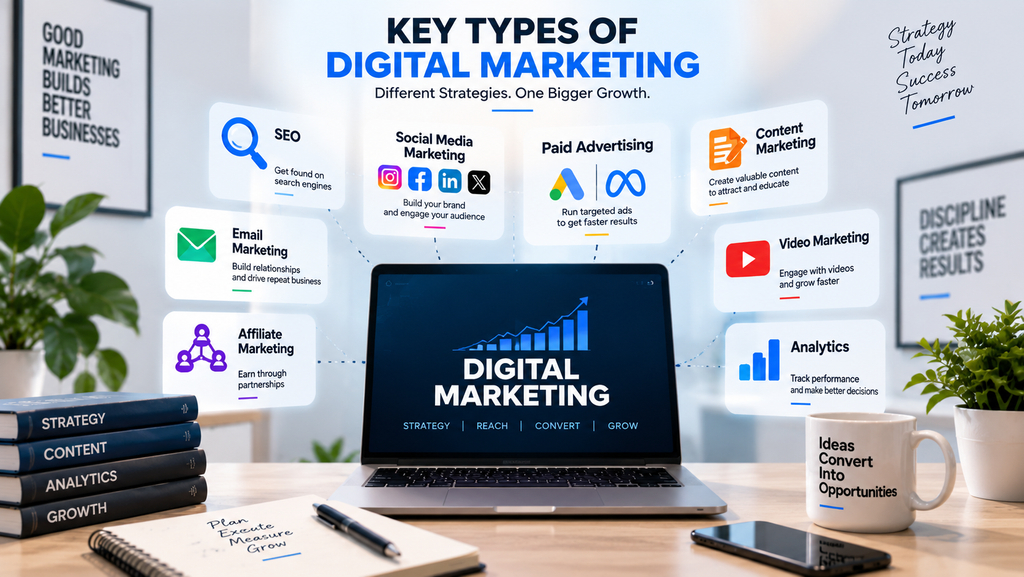
Digital marketing includes several different strategies. Here are some of the most important ones.
1. Search Engine Optimization (SEO)
SEO is the process of improving a website so that it can appear higher in search engine results.
For example, if someone searches for “best real estate company in Rohini”, a well-optimized website may have a better chance of appearing in the search results.
SEO usually involves keyword research, useful content, technical improvements, website optimization, and building website authority.
2. Social Media Marketing
Social media marketing involves using platforms such as Instagram, Facebook, LinkedIn, and other social networks to build awareness and engage with customers.
Businesses can share educational content, videos, product updates, customer reviews, and promotional offers.
The goal is not always to make an immediate sale. Building trust and maintaining a relationship with the audience are also important.
3. Search Engine Marketing and Paid Advertising
Paid advertising allows businesses to reach potential customers by paying to display advertisements on digital platforms.
Examples include Google Ads and Meta Ads.
A business can create campaigns based on objectives such as website traffic, leads, sales, or brand awareness.
4. Content Marketing
Content marketing focuses on creating valuable and relevant content for a target audience.
This can include:
- Blog posts
- Videos
- Social media posts
- Guides
- Infographics
- Case studies
Good content can help a business attract visitors, educate potential customers, and build credibility.
5. Email Marketing
Email marketing allows businesses to communicate directly with people who have provided their email addresses.
Businesses can use emails to share newsletters, offers, product updates, educational content, and follow-ups.
When used correctly, email marketing can help build long-term customer relationships.
How Does Digital Marketing Work?
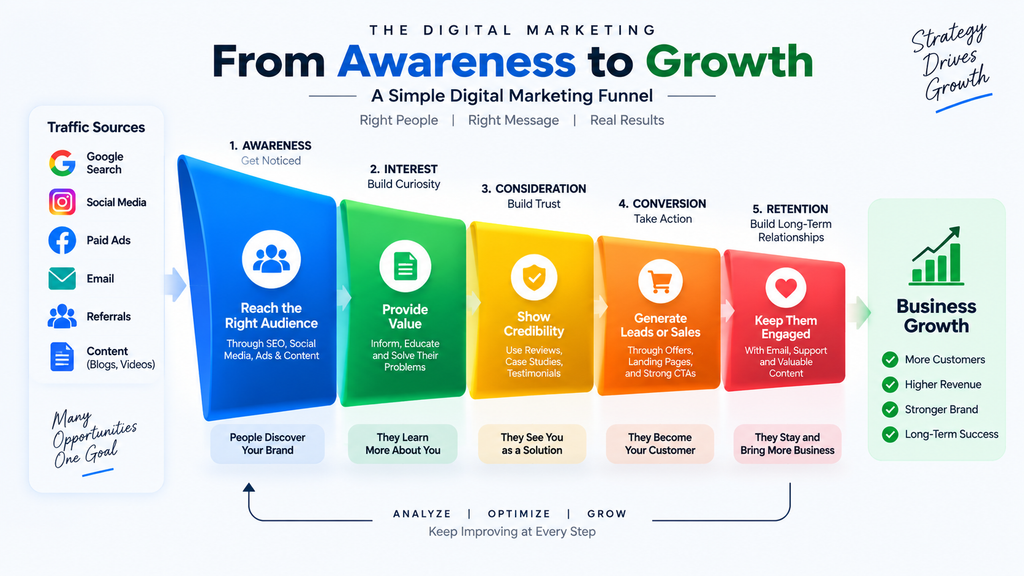
A successful digital marketing strategy usually starts with understanding the target audience.
First, a business identifies who its ideal customers are and what problems they have. Then it chooses the right platforms and creates useful content or advertisements.
For example, a local real estate business might use SEO to attract people searching for properties, Instagram Reels to showcase homes, and Meta Ads to generate enquiries.
The business can then measure the results and improve its strategy based on the data.
This process can be summarized as:
Research → Strategy → Content/Ads → Reach → Leads → Conversion → Analysis → Optimization
How Can Beginners Learn Digital Marketing?
Beginners do not need to learn everything at once. It is better to start with the fundamentals and gradually develop practical skills.
A simple learning path can be:
- Understand digital marketing fundamentals.
- Learn SEO basics and keyword research.
- Learn social media marketing.
- Understand paid advertising.
- Practice content creation.
- Learn analytics and reporting.
- Work on real projects.
- Build a portfolio.
Practical experience is especially important. Creating your own website, publishing blog posts, managing social media pages, or running small test campaigns can help you understand how digital marketing works in the real world.
Career Opportunities in Digital Marketing

Digital marketing has created many career and business opportunities.
Beginners can explore roles such as:
- SEO Executive
- Social Media Manager
- Content Writer
- Performance Marketer
- Meta Ads Specialist
- Google Ads Specialist
- Digital Marketing Executive
Experienced professionals can also work as freelancers, consultants, or agency owners.
Final Thoughts
Digital marketing is no longer just an optional strategy for businesses. It has become an important part of how brands attract, communicate with, and convert customers.
The good news is that beginners can learn digital marketing step by step. Start with the basics, choose one skill to focus on, practice consistently, and use real projects to improve your knowledge.
The most important part is not simply learning digital marketing—it is putting what you learn into practice.